Travel Guide
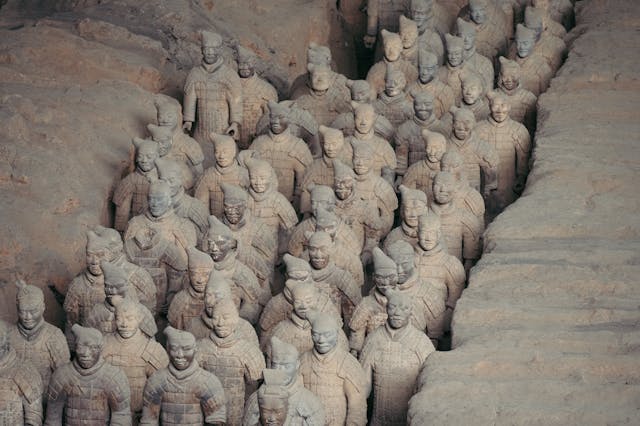
Xi'an is the capital of Shaanxi Province, the third most populous city in western China, and the most populous city in the northwest region. It has a long history and served as the capital of several important dynasties in China under the name Chang'an. It is one of the Four Great Ancient Capitals of China. Xi'an is also one of the starting points of the Silk Road and is home to world cultural heritage sites such as the Terracotta Army of Qin Shi Huang.
Best Time to Visit
Spring and Autumn
Daily Budget
¥400-800 ($60-120) per day
Getting Around
Subway, Bus, Taxi, Ride-hailing
Suggested Stay
3-5 days
Must-Visit Attractions
Terracotta Army Museum of Qin Shi Huang
The Terracotta Army Museum of Qin Shi Huang is located in Lintong District, Xi'an City, Shaanxi Province. It is the burial pit of the mausoleum of Qin Shi Huang, the first feudal emperor of China, and is known as the "Eighth Wonder of the World." The terracotta warriors unearthed here are in various forms and lifelike, and are important physical materials for studying the military, culture, and art of the Qin Dynasty.
Mausoleum of the First Qin Emperor
The Mausoleum of the First Qin Emperor is the mausoleum complex of Qin Shi Huang, the first emperor of the Qin Dynasty, located in Lintong District, Xi'an, Shaanxi Province. It was built from 246 to 208 BC, lasting 38 years. The layout of the mausoleum is modeled after Xianyang, the capital of the Qin Dynasty, and is divided into inner and outer cities. The tomb chamber has not yet been excavated. Archaeological excavations have mainly focused on the burial pits around the mausoleum, including the famous Terracotta Army.
Daming Palace National Heritage Park
Daming Palace National Heritage Park, located in Xi'an, Shaanxi Province, is the royal palace complex of the Tang Dynasty, which served as the residence of the Tang Dynasty emperors for more than 220 years. It is a national heritage park of China and a part of the UNESCO World Heritage Site "Silk Roads: the Routes Network of Chang'an-Tianshan Corridor". The park covers an area of more than 4,800 acres, which is 3.5 times the size of the Forbidden City, 3 times the size of the Palace of Versailles, and 13 times the size of the Louvre. Important buildings in the park include Danfeng Gate, Hanyuan Hall, Xuanzheng Hall, and Zichen Hall. These halls were the core places for the Tang Dynasty to hold national ceremonies, handle government affairs, and the emperor's daily life, demonstrating the magnificent architectural style and imperial spirit of the prosperous Tang Dynasty.
Grand Tang Dynasty Ever Bright City
Grand Tang Dynasty Ever Bright City is located in Yanta District, Xi'an City, Shaanxi Province. It is a pedestrian street with the prosperous Tang Dynasty culture as its background, integrating culture, tourism, and commerce. It is famous for its magnificent Tang-style architecture, exquisite sculptures, brilliant night scenes, and rich cultural performances. It is an excellent place to experience the prosperity of the Tang Dynasty. Tourists can enjoy various imitation Tang buildings, cultural landscapes, taste authentic food, and watch wonderful street art performances. Especially at night, the lights are brilliant, the colors are dazzling, and the atmosphere is full.

Muslim Quarter
Xi'an Muslim Quarter is a snack street and commercial area located in the center of Xi'an, China, adjacent to the Bell Tower and Drum Tower. It is bordered by Shehuo Street to the east, Zaoyuan Lane to the west, West Avenue to the south, and Hongfu Street to the north. The area has ten mosques, the largest of which is the Great Mosque, which is listed as a national protected cultural relic for its traditional architecture and religious significance. According to the 2010 census, the area has a population of about 60,000, more than half of whom are Hui people, and the rest are Han Chinese. In the past few decades, Xi'an Muslim Quarter has become a tourist attraction known for its culture and cuisine, attracting tourists from all over the world every year. The history of the Muslim Quarter can be traced back to the Tang Dynasty, when Muslim merchants came and gathered in Chang'an (today's Xi'an) through the Silk Road. Since then, from the Five Dynasties to the Song Dynasty, the Muslim population began to settle near Daxuexi Street and Huajue Great Mosque. Later, in the Ming Dynasty, the town government of Xi'an was located next to the Drum Tower, a traditional building used for timing, which was very close to the Muslim Quarter. This gathered a large number of wealthy merchants, thus cultivating a commercial lifestyle mainly dominated by Muslims within the Muslim Quarter. After the Ming Dynasty, the Qing Dynasty formed the pattern of "Three Temples and Thirteen Workshops". Although the Shaanxi-Gansu Hui Revolt in the late Qing Dynasty destroyed a large number of Muslim communities in Northwest China, the Muslim Quarter of Xi'an was unaffected due to its highly commercialized status and protected location within the city walls. The Middle Temple and the West Temple were built in 1919 and 1920 respectively, further developing the Muslim Quarter into a pattern of "Nine Temples".
Great Ci'en Temple
The Great Ci'en Temple is located in Yanta District, Xi'an City, Shaanxi Province, and is the ancestral temple of the Faxiang School of Chinese Buddhism. It is famous for its iconic building, the Giant Wild Goose Pagoda, which was originally presided over and built by Master Xuanzang, whose journey to the West to obtain Buddhist scriptures inspired the novel 'Journey to the West'. The Great Ci'en Temple, along with Daxingshan Temple and Jianfu Temple, are known as the three great scripture translation centers of the Tang Dynasty. The temple was first built in the 22nd year of Zhenguan in the Tang Dynasty (648 AD) by Emperor Gaozong of Tang to commemorate his mother, Empress Wende. The temple was rebuilt in the 2nd year of Chenghua in the Ming Dynasty (1466 AD). In 1961, it was listed as a Major Historical and Cultural Site Protected at the National Level. In 1983, it was designated by the State Council as a National Key Buddhist Temple in Han Chinese Areas. In early 2001, it was rated as a National AAAA-level Tourist Attraction. In 2014, the Giant Wild Goose Pagoda was inscribed on the UNESCO World Cultural Heritage List.
Must-Try Local Food
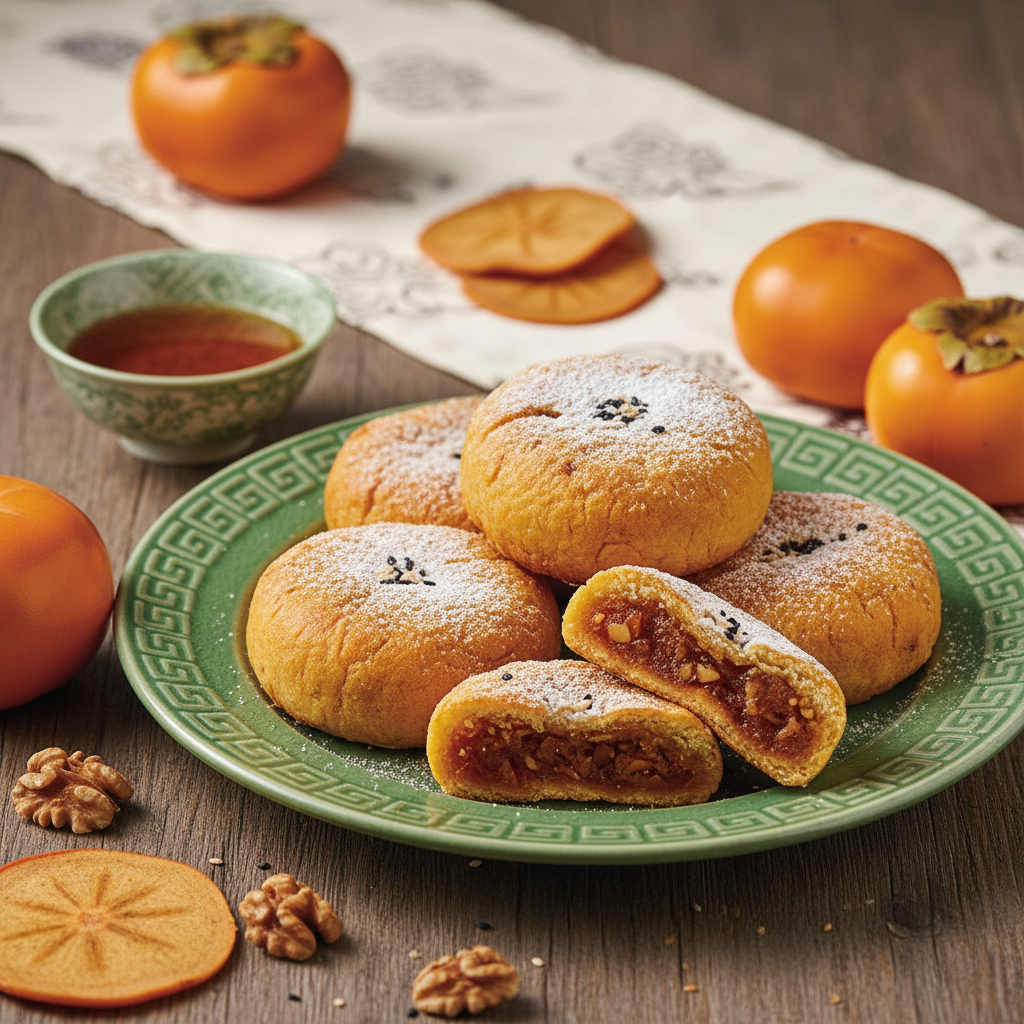
Dried Persimmon
Dried persimmon is a traditional snack made by peeling fresh persimmons, sun-drying them, and pressing them flat. It has a sweet and chewy texture with the unique fragrance of persimmon, and is a common snack and local specialty in autumn and winter. Depending on the production process, some dried persimmons may have a layer of white sugar frost on the outside, known as 'persimmon frost'.
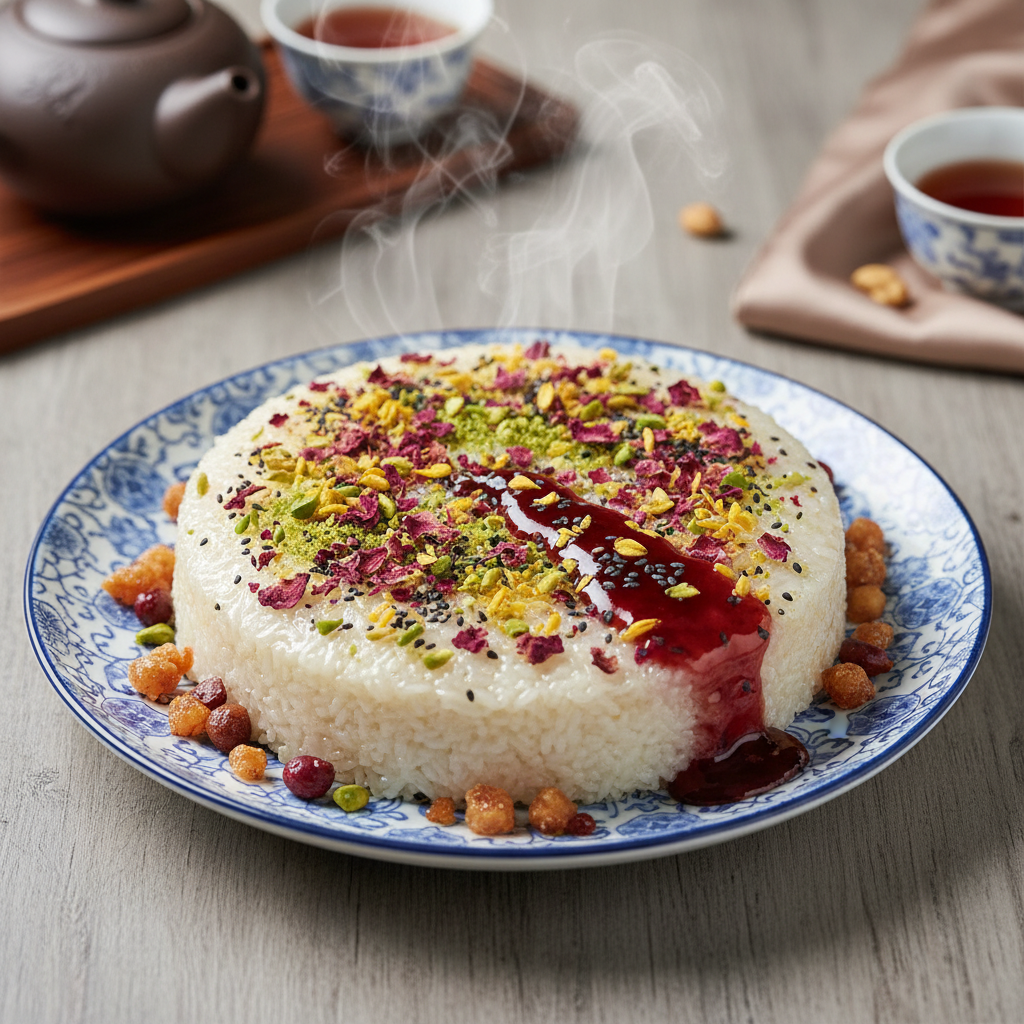
Jing Gao
Jing Gao is a distinctive snack from Xi'an, Shaanxi province. It is primarily made from glutinous rice flour, steamed, and has a sweet, soft, and glutinous texture. It gets its name from its small, exquisite, and mirror-like shape.
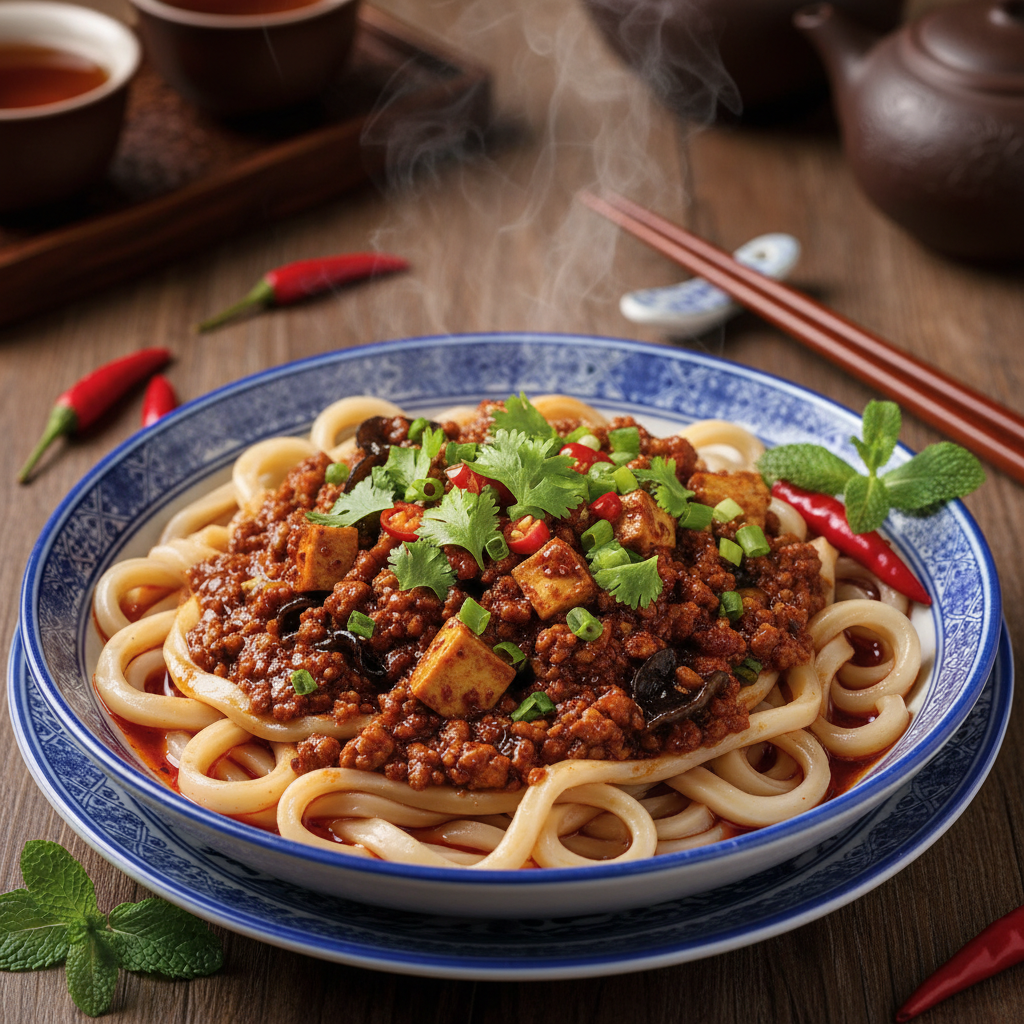
Sauteed Diced Pork Noodles
Sauteed Diced Pork Noodles is one of Shaanxi's traditional noodle dishes, famous for its thin, chewy noodles, sour, spicy, and savory broth, and a rich variety of 'saozi' (toppings). It is a specialty of Shaanxi Province, with Qishan Sauteed Diced Pork Noodles being the most renowned.
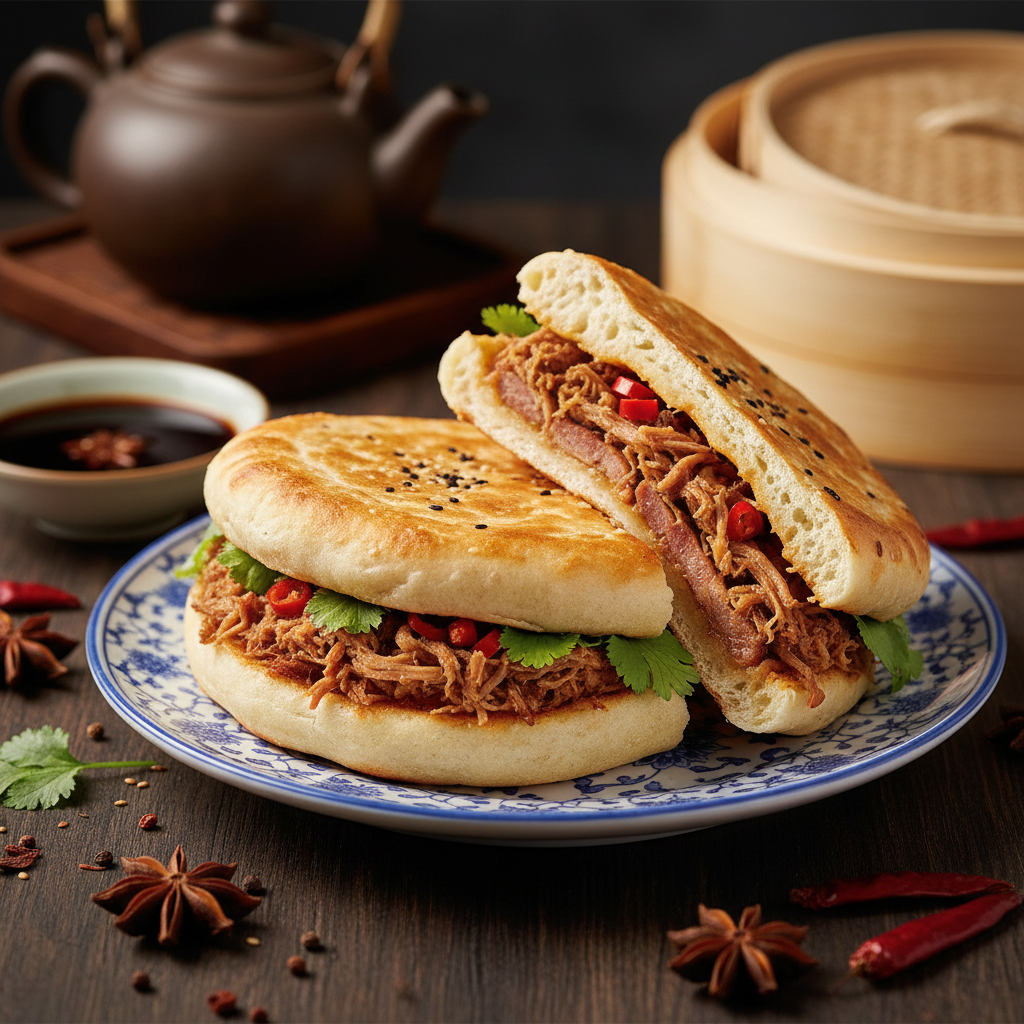
Roujiamo
Roujiamo is a street food originating from Shaanxi, typically consisting of stewed meat (most commonly pork, beef in Xi'an Muslim areas, and lamb in Gansu) that has been chopped or shredded and stuffed into a 'Baiji Mo' (flatbread). It is considered a Chinese snack similar to Western hamburgers.
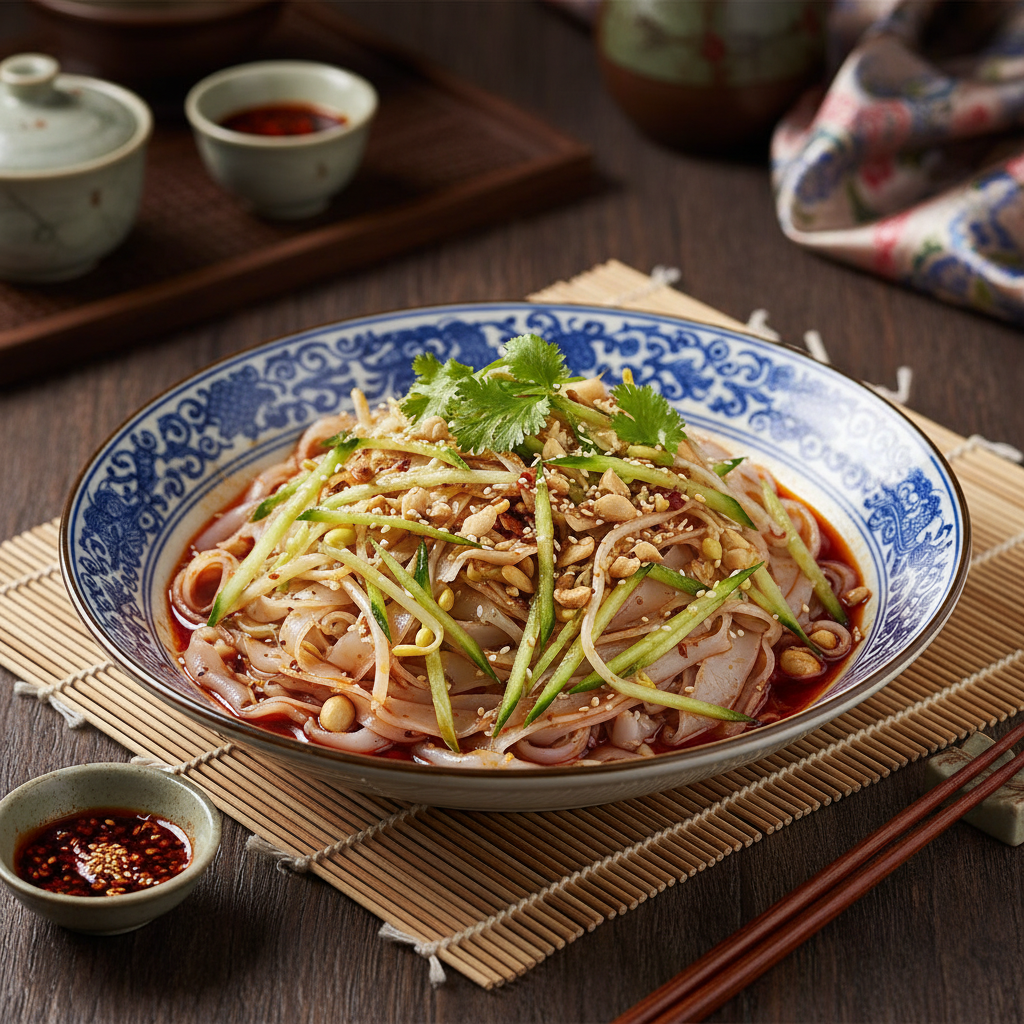
Liangpi
Liangpi is a Chinese snack, a cold noodle dish made from wheat flour or rice flour. It is a specialty dish originating from Xi'an, part of Shaanxi cuisine, and is now popular throughout China.
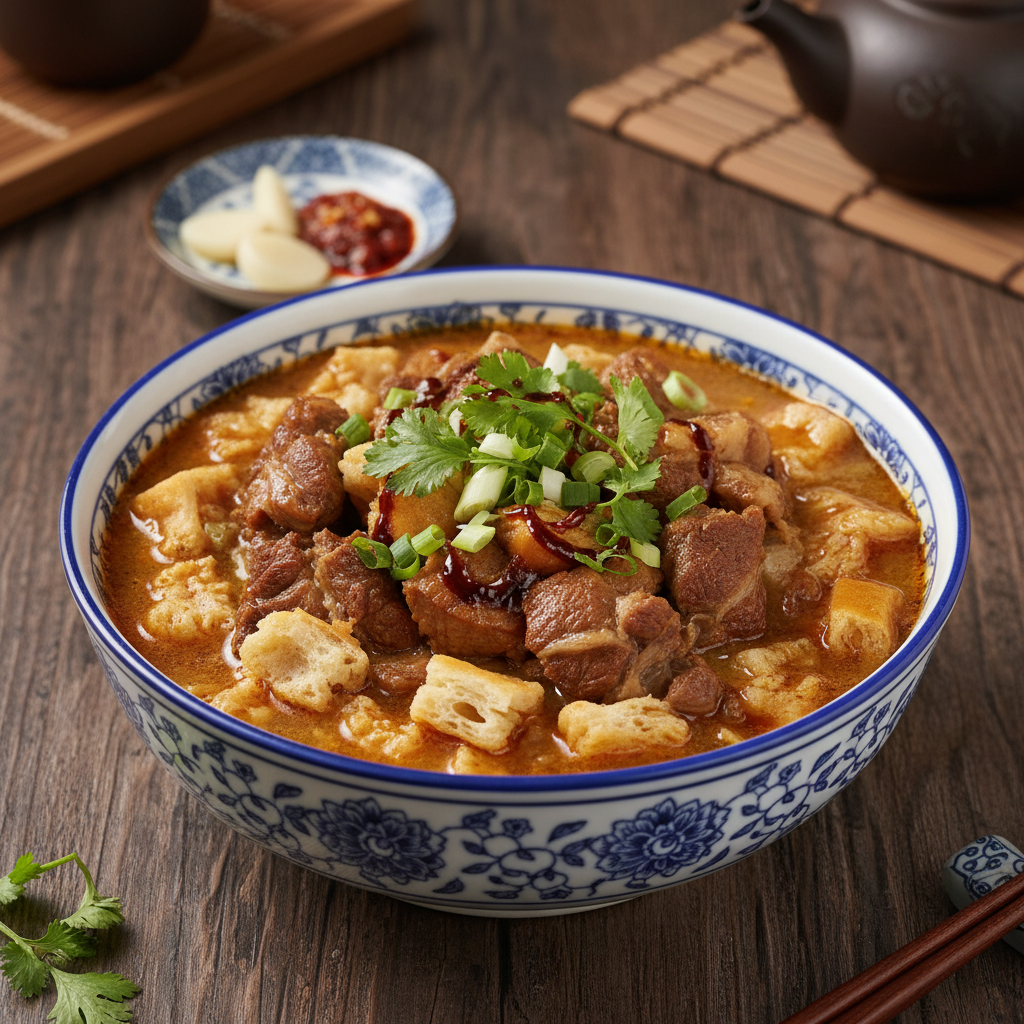
Yangrou Paomo
Yangrou Paomo is a specialty dish from the Guanzhong region of Shaanxi (especially Xi'an). It is a steaming hot stew made by cooking shredded steamed leavened bread (locally called 'mo') with lamb or beef broth, with the lamb version being the most common and classic.